
Appointments & Questions
What to bring to a nail or foot-care appointment
One page for the counter, one for your bag: current photos, a dated list of what you have tried, your medicines and three questions — so the visit does not start empty-handed.
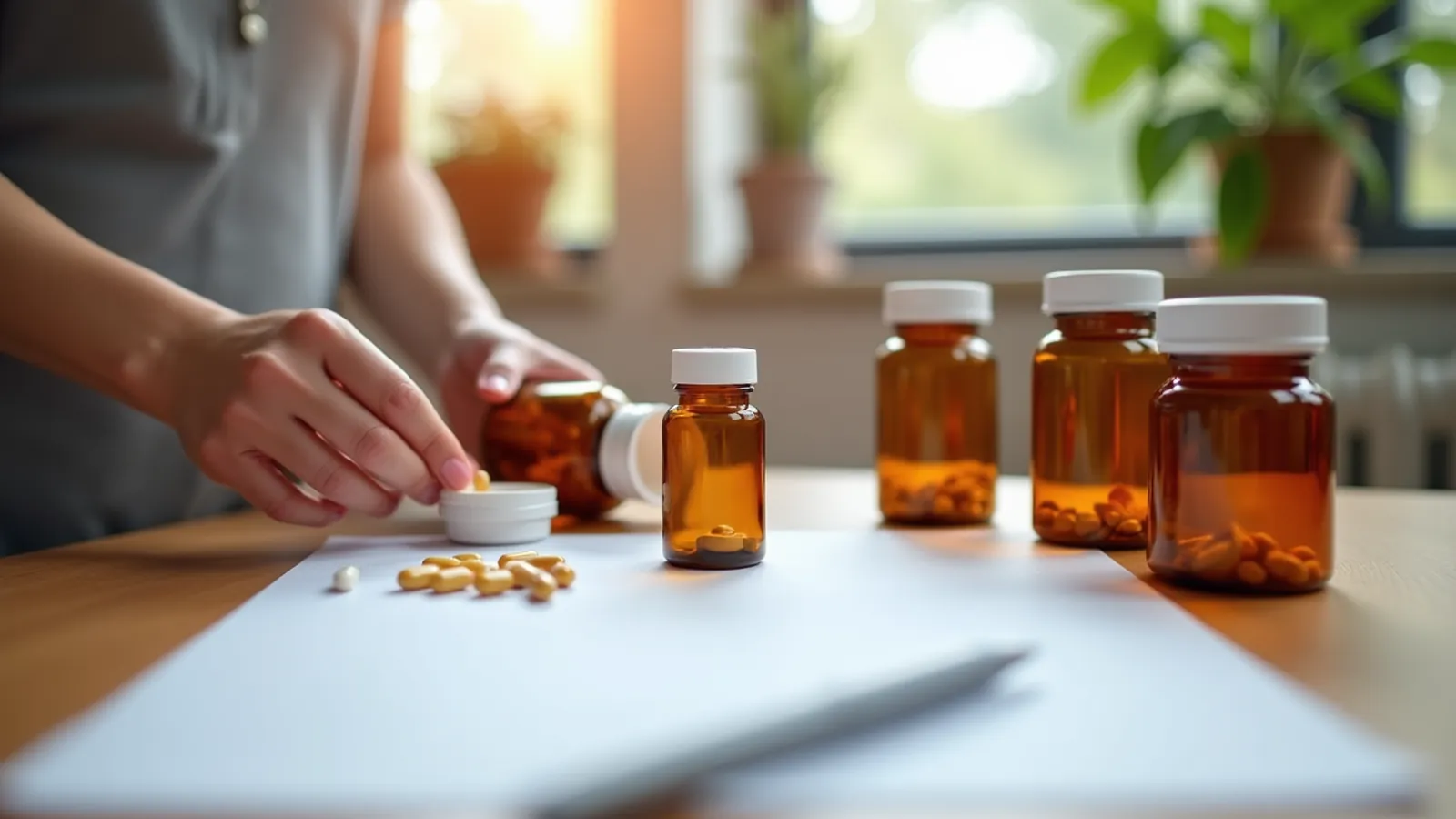
Thursday morning, and nothing in your bag
The appointment is on Thursday. You have never seen a podiatrist, and nobody has told you what to carry in.
So the question loops: do you bring the old cream from last winter? The photos on your phone from six months ago? The list of supplements? Or nothing, because you are not sure any of it is wanted?
Underneath that is the worry you have not said out loud. That the visit will be short — someone glances at the nail, says a word you have already heard, hands you a prescription and ushers you out, and you still do not know what to do. Worse, that you freeze and the thing that has been worrying you for a year stays in your mouth, and six months from now you are still hiding your feet.
We cannot tell you what is going on with your nail or what anyone will recommend. That belongs to a qualified health professional. What this page gives you is the part you can control: a bring-along list you can gather in about half an hour, so the visit does not start empty-handed.

Browse 42 question prompts.
The free question prompt bank has 42 prompts in five groups to read and borrow wording from. Choosing your top three and printing them as one page happen in the visit pack builder, part of the free visit kit.
Free to browse. The question page comes with the free kit sign-up and a VERIFY reply.
Five things to bring
Start with whatever your own office asked for: a letter, a text, a form, an insurance card. Only that office knows what it needs. Then add these five.
1. Photos of the nails you want looked at
Taken this week, in daylight, with the date in the caption or the file name so nobody has to guess when.
2. A dated list of what you have tried
One line each: what it was, when you started, how long you used it, what you noticed.
3. Your medicines and supplements
Including the over-the-counter ones and the vitamins, not only anything for your feet.
4. Three questions, most important first
In your own words, with space underneath for the answers you are given.
5. The appointment details and blank pages
Date, time, office and the name of the person you are seeing — plus room to write what you are told.
If you have not booked yet, or are not sure who to book with, our page on who looks at nails and feet describes the professionals you may be sent to.
Ask the office what to bring when you book
One call makes the list shorter: the one where you ask the office what it wants you to bring. The front desk cannot assess your nail and does not need to; it can tell you about forms, ID, referral letters, arrival time and parking.
- “I have an appointment coming up. What should I bring?”
- “Do you need an insurance card, photo ID, a referral letter, or anything from my own doctor?” Write the answer down with the date you called.
- “Would it help if I brought the things I have used, or is a list enough?”
- “How early should I arrive, and is there anything about the building or parking I should know?”
If you are calling or packing for someone else, make sure you have their permission to book, to hear details about their appointment and to carry their papers, and keep their notes with their own things.
Current photos, dated and steady
An old photo is better than none, but what you want is a pair: a new picture taken in the week before the visit, and your oldest one beside it.
- One close-up of each nail you want looked at, plus a wider shot of both feet side by side.
- Daylight, flash off if you can, and the phone resting on a book so the picture is steady.
- Put the date in the caption or file name: “left big toe, October 2026” is enough.
- Keep them in your own folder. We do not ask for photos, and no website should ask you to send them for a look.
If you are helping a parent or a partner, ask their permission before you take, keep or show a picture of their feet.
A dated list of what you have tried
You do not need half-empty bottles. You need one page, one line per attempt, in the order you tried it.
Give each attempt its own line, whether it came from a pharmacy, a supermarket, an ad on your phone or a clinic. If you were told something at the time — “use it for three months” — copy their wording in quotation marks rather than trusting your memory of it.
| What to write | Why it helps the conversation |
|---|---|
| What it was, and where it came from | You can point to a line instead of describing a bottle you no longer own. |
| Start date, and how long you used it | Gives the timeline a shape you do not have to hold in your head. |
| What you noticed, and why you stopped | Keeps your own observation separate from what the label promised. |
| What it cost, roughly | Useful if you want to ask what is worth paying for next. |
These are headings for your own record, not a ranking or a recommendation for or against anything.
Bring the label or the bottle only if the office asks for the exact product, strength or ingredients. A question when you book settles it: “Would it help if I brought the things I have used?”
Medicines and supplements, on one page
Bring one list of everything you take, not only anything for your feet: prescriptions, medicines you take regularly, vitamins and supplements, including the bottle with no label left. For each one, write the name as it appears on the package, the amount and how often you take it.
A pharmacy printout is the easiest base, with your additions handwritten at the bottom. If you already keep a medicine list for other appointments, bring a copy. You do not have to explain on the page why you take any of it; that conversation belongs in the room.
Why a free printable, and what the email is for
Your guard is up, and it should be. You have already paid for a cream that promised a lot, a soak that smelled of salad and a gadget that sat in a drawer. A free printable from a website you had not heard of sounds like the start of another pitch.
So here is the plain version. What we make is paper. The free Nail and Foot-Care Visit Kit is 24 pages, among them a nail map, a photo log, a medicines and products list, questions by type of visit, a visit snapshot and a visit record. It comes as a printable PDF (US Letter or A4) and an editable DOCX, both usable offline once downloaded. It is a place to keep what you gather. It is not a treatment schedule, it does not tell you what to use, and nothing in it promises a result.
About the email. Downloads here ask for a first name and an email address because that is how the file link reaches you; we send a short email first, and once you reply VERIFY, the delivery email arrives with the link to the download page. Signing up also starts four short tip emails, sent about 2, 4, 7 and 11 days after you reply VERIFY, and then the series ends. Nothing is for sale, and every email has an unsubscribe link at the bottom.
What we do not do: we do not ask for health details, and we ask you not to send any — no photos, no diagnosis, no medicine list, no filled-in page. The files are static, so nothing you write in them reaches us. Nothing is sold on this site: no checkout, no account, no card details. The Care Instruction Capture Template works the same way.
If you would rather not give an email, a sheet of paper with five headings does the same job. If you do sign up for the free kit, its visit pack builder also prints a blank visit snapshot.
A fictional bag list
Here is how the five items might look on one page the night before a first visit. It shows the layout, not what any particular office requires.
Folder: two photos (October and April), product list, medicine list, three questions, four blank pages.
Product line: “Soak used in March, most evenings for two weeks, no change I could see, stopped because of the smell.” Medicine line: “One tablet daily, name copied from the pharmacy label.” Question one: “What should I be doing day to day while this is being looked at?”
Fictional wording to show the layout. Not a patient case and not a health result.
Pack it the night before
Put the pages in one folder or a large envelope, in the order you will need them: appointment details on top, then photos, then the product and medicine lists, then your questions, then the blank pages. Leave the folder where you will trip over it on the way out.
Then take things out. A thick stack of every record you own is harder to search when someone asks for one page, and it carries more private information out of the house. Bring what this visit needs, plus socks, a spare pair, and enough time to arrive unhurried.
After the visit
Before the papers scatter, put every page back in the folder and add what is new:
- Under each question, write the answer in the words you were given, then add your own summary on a separate line, labeled as yours.
- Date any new instruction and note who gave it.
- List what you still want clarified, and who to ask.
- Put this week’s photo in with the older one. Two dates make a timeline.
One honest note about timelines. The American Academy of Dermatology’s page on nail fungus diagnosis and treatment notes that if a whole toenail is removed, it can take 12 to 18 months to grow back. If you keep a record of a nail, plan for months rather than a single visit. And if a nail looks different to you, have it looked at by a qualified health professional rather than guessing from what you read online.
Organization tools, not medical advice. This page helps you prepare questions and keep notes. It does not diagnose a nail condition, recommend a treatment or promise a result. For an assessment, speak with a qualified health professional. Educational and medical scope
When the folder stops closing
A folder you already own is enough to start. Our guide to portable document organizers for appointments lists what to check when you want something sturdier — inner size, closure, weight, reaching a pocket one-handed — and names no products.
Questions people ask
Do I need to bring the bottles and tubes themselves?
Only if your office asks. A dated one-page list is easier to read and lighter to carry; bring a label or bottle when the office wants the exact product, strength or ingredients. Ask when you book: “Would it help if I brought the things I have used?”
Should I bring photos if I have never seen this professional before?
Take new photos in the week before the visit and keep your oldest photo beside them, with the date on each. Keep them in your own folder, and do not send them to us; we do not ask for photos or health details.
What if I freeze and forget my questions?
Put your main question at the top of the page in larger letters, and hand the page over if the words will not come. Before you leave, ask it again, or ask the office whether you can check the answer with them afterward.
Sources and editorial notes
- American Academy of Dermatology, Nail fungus: diagnosis and treatment, retrieved October 18, 2026 and checked again October 23, 2026. It notes that a removed toenail can take 12 to 18 months to regrow.
Examples are illustrative. Not clinically reviewed. October 23, 2026: this article now also holds the booking-call questions from our former article on what to bring to a podiatrist, which redirects here. See our Editorial Policy, Review Methodology and Affiliate Disclosure.
Keep your preparation connected
Back to the blogThree Questions to Write Before a Nail-Care Appointment
Describe what you noticed, choose three questions, record the answers.
How to Record Podiatrist Instructions at Your Visit
How often, how long, a missed dose and a clarify box, before you stand up.
How to Use Your Question Card When There Is No Desk
Plan a writing surface and keep pages together.
Start with three questions.
Browse 42 free prompts for wording, put the most important question first, and write all three on one page for the folder.
Free to browse. Making and printing your question page comes with the free kit sign-up.